

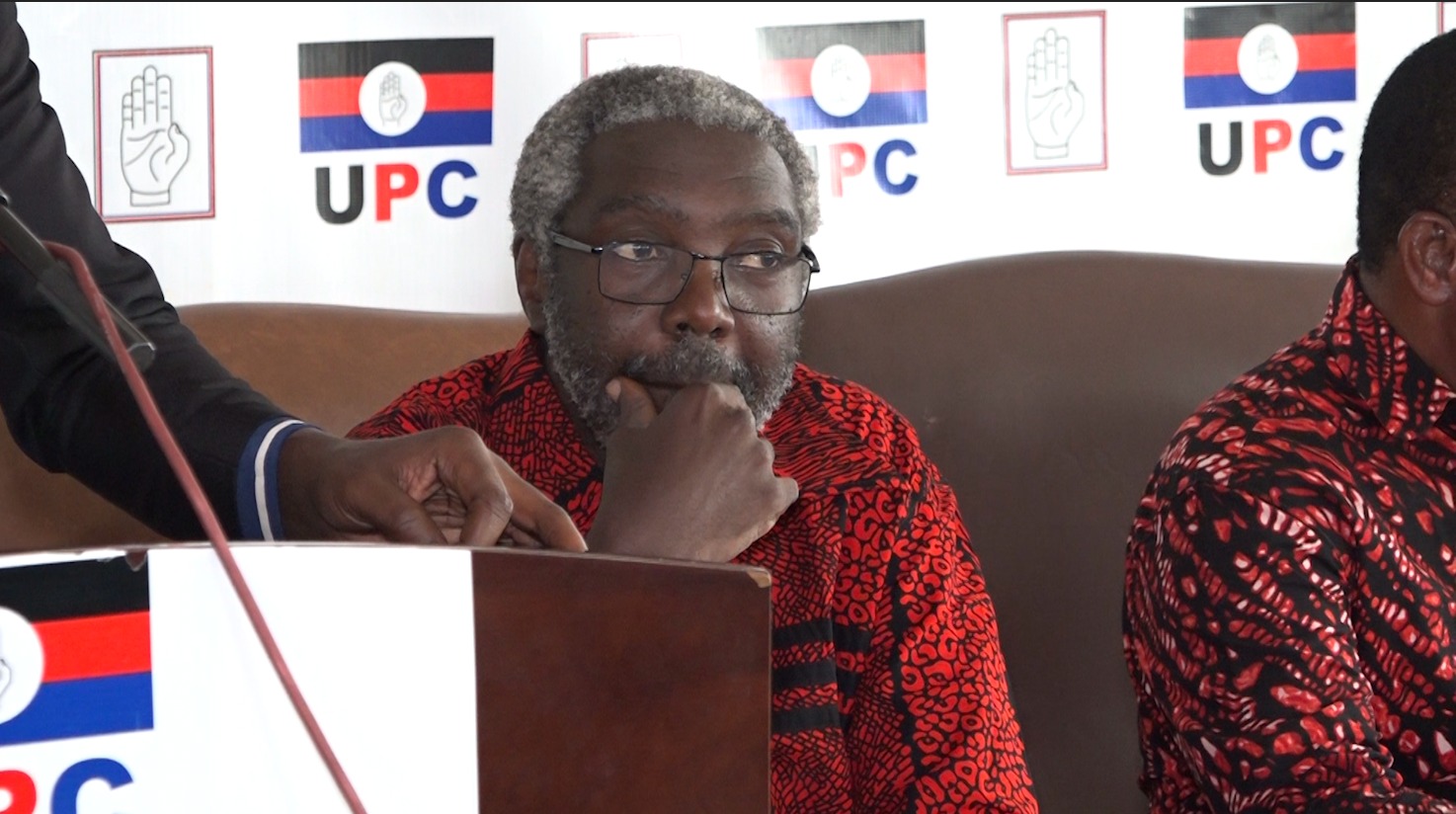
Leaders from the Forum for Democratic Change (FDC) and the Uganda People’s Congress (UPC) in the Lango sub-region have criticised remarks by UPC president Jimmy Akena, accusing him of misleading voters after he advised supporters to write his name on ballot papers during the January 15 polls, despite not appearing on the presidential ballot.
Joel Okao Otema, an FDC member, said while Akena has a right to question his exclusion from the ballot, encouraging voters to write his name amounts to undermining the electoral process and the responsibility of citizens.
Otema described the advice as reckless, arguing that it neither changes the election outcome nor advances the interests of UPC supporters.
“Encouraging people to spoil their ballots does not stop whoever wins on January 15 from taking office,” Otema said.
“It does not contribute to the aspirations of the people who believe in UPC, and it diverts attention from the real national discourse.”
He accused Akena of personalising political debate in Lango at a time when Ugandans should be engaging on broader national questions such as political transition, governance and development.
“He has influence and a following, and that influence should be used to mobilise people around national issues, not non-issues,” Otema said, urging the UPC leader to take responsibility for his failure to appear on the ballot.
Otema also dismissed claims that the Electoral Commission was manipulated to block Akena, arguing that the law, rather than political favour, determines who qualifies to contest.
“The law allows anyone to contest once they meet the academic requirements, collect the required signatures and pay the prescribed fees,” he said, pointing to the inclusion of other opposition candidates on the ballot.
“On that basis, the responsibility for not appearing on the ballot rests solely with Honourable Akena.”
He added that unless Akena addresses internal party challenges, documentation issues and organisational weaknesses within UPC, similar problems could recur in future elections.
UPC member Jimmy Awany traced the party’s political journey with Akena since his return from exile in 2005, saying supporters had repeatedly been mobilised to back President Yoweri Museveni in previous elections.
“In 2011, 2016 and 2021, we were instructed to support President Museveni,” Awany said. “We expected that by 2026, UPC would be ready to compete nationally, but that has not happened.”
Awany cited provisions of the UPC constitution which he said bar Akena from contesting simultaneously as party president and as a presidential candidate.
He also questioned the consistency of Akena’s current position, given past cooperation with the ruling party that saw his wife appointed to the Cabinet.
He rejected calls to boycott or spoil ballots, urging UPC supporters to exercise their constitutional right to vote for any of the eight candidates on the ballot, and openly declared his support for President Museveni.
“This is a national election. If you are not on the ballot, how do you expect to be viewed in future elections, including in 2031?” Awany asked, warning that emotional statements could damage Akena’s political standing beyond Lango.
Awany appealed to elders and opinion leaders in the sub-region to engage Akena in dialogue, saying the ongoing standoff risks isolating Lango from broader national political positioning.
“These are national matters. It is not about personal grievances,” he said. “Lango must position itself on issues of development and transition, not politics of intrigue and hatred.”
